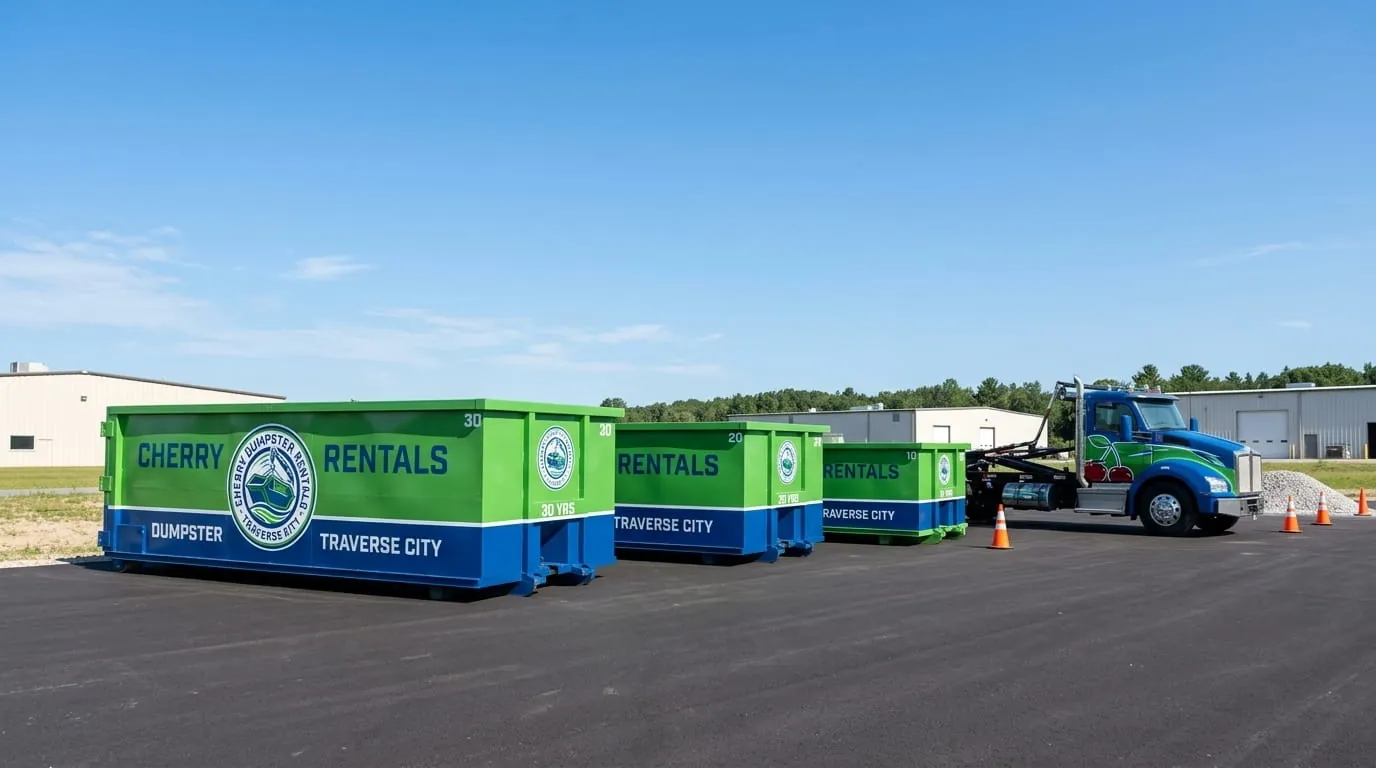
A roll-off dumpster is one of the hardest-working tools you can park at your home, but it is also one of the heaviest things that will ever sit on your driveway. An empty 10-yard container already weighs a couple thousand pounds, and once you load it with roofing shingles, broken concrete, or wet remodel debris, the whole package can push five to eight tons onto a small footprint. Add the delivery truck rolling in and the container sliding off the back, and you have a lot of force concentrated on a surface that was never engineered for it. Here in the Traverse City area, where freeze-thaw winters, soft lakefront soil, and gravel cottage drives are the norm, a little planning goes a long way toward keeping your driveway looking exactly the way it did before we showed up.
The good news: driveway damage during a dumpster rental is almost always preventable. This guide walks through why roll-offs can mark or crack a surface, the simple protective steps that work, and the northern-Michigan specifics that matter most on our roads and driveways.
Why roll-offs can mark or crack a driveway
The problem is not the dumpster itself so much as how its weight is delivered. A roll-off container rides on a small number of steel contact points: the rear wheels and the runners or feet that support the front of the box once it is on the ground. When several tons rest on those narrow points, the pressure per square inch can be enough to dent asphalt, hairline-crack concrete, or grind a divot into pavers. Three things drive the risk:
- Point loading. Steel wheels and runners concentrate weight instead of spreading it, so all that mass lands on a few small patches of your driveway.
- Movement during delivery and pickup. The container drags and rolls as it comes off the truck bed and again when it is winched back on. That sliding motion is what leaves scrape marks and gouges.
- Temperature. Cold concrete is more brittle; hot asphalt is softer and more easily deformed. The same dumpster is gentler or harsher depending on the season and the surface.
None of this means you should be afraid to put a dumpster on your driveway. It simply means the surface deserves a little protection, the same way you would slide a pad under a heavy appliance before dragging it across a floor.
The number-one fix: boards under the contact points
The single most effective thing you can do is lay down wood under the dumpster. Thick planks or sheets of plywood act as a bridge, spreading the container's weight across a much larger area so no single spot takes the full load. This is the same principle that keeps a person from sinking into snow on skis versus boots.
A few practical guidelines that work well on local driveways:
- Use real lumber, not scraps. Two-by-tens, two-by-twelves, or three-quarter-inch (or thicker) plywood are ideal. Thin, flimsy boards will crack and stop protecting anything.
- Cover the wheels and the front runners. Place boards where the rear wheels will land and where the front of the box rests once it is down. Ask your delivery driver where the contact points sit; a good hauler knows exactly where the container touches down.
- Run boards in the direction of travel. Because the container slides as it comes off the truck, laying planks along the path the wheels roll gives them a continuous surface and prevents the steel from catching an edge and scraping.
- Double up on soft or decorative surfaces. Over pavers or a thin asphalt drive, two layers of plywood distribute the load even better and add a sacrificial buffer.
If you do not have lumber on hand, mention it when you book. On many jobs our crew brings and places protective boards automatically, especially when we know the drive is decorative or newer. When in doubt, give us a call before delivery and we will talk through your specific surface.
Weight distribution and smart loading
Protection does not end once the container is on the ground. How you load it matters too. Concentrating all the heavy material at one end of the box shifts the load onto fewer feet and can rock the container, grinding those points into your driveway. Instead:
- Spread heavy debris, such as concrete, brick, dirt, and shingles, evenly across the floor of the dumpster rather than piling it at one end.
- Keep the container within its weight rating. Overloading not only risks your driveway, it can make the box unsafe to haul. If you are unsure how much your project will generate, our dumpster size guide helps you match the container to the job.
- For a smaller footprint on a tight or delicate driveway, a compact container like a 10-yard dumpster concentrates less total weight and takes up less space than a larger box, which is often the safer choice for a residential drive.
Northern-Michigan seasons change the rules
Winter freeze-thaw cracking
Grand Traverse County winters are hard on concrete and asphalt. Water seeps into tiny pores and existing hairline cracks, freezes, expands, and pries the surface apart a little more with every freeze-thaw cycle. By late winter, many driveways are already stressed and more brittle than they look. Setting a multi-ton dumpster on a surface that is already working through a freeze-thaw season is asking a lot of it. In cold months, boards matter even more, and it helps to place the container on the most solid, well-drained part of the drive. Avoid spots where meltwater pools and refreezes.
Snow and ice around the pad
Before delivery in winter, clear snow and ice from the area where the dumpster will sit. A layer of packed snow or ice under the container melts unevenly, letting the box settle, shift, and dig in as conditions change through the day. A cleared, boarded pad gives the container a stable, predictable base. It also keeps the delivery driver safe and makes backing in far more precise.
Summer heat and soft asphalt
Asphalt is a different animal in July and August. On a hot day the surface softens, and steel wheels or runners can press permanent dents into it, especially on a newer driveway that has not fully cured. In peak summer heat, plywood under every contact point is essential on asphalt, and it is worth positioning the container in shade if your layout allows. The cooler the asphalt, the more it resists deformation.
Concrete vs. pavers vs. gravel: placement by surface
Up-north homes and cottages come with every kind of driveway imaginable, and each one calls for a slightly different approach.
Concrete
Concrete is durable but brittle, and it is prone to hairline cracking under point loads, particularly in winter. Boards under the wheels and runners are usually all you need. Steer the container away from existing cracks, expansion joints, and thin edges, which are the weakest spots. If your concrete is decorative or stamped, treat it like pavers and double up on protection.
Decorative pavers
Paver driveways are beautiful and expensive to repair, and they are the most vulnerable surface of the group. Individual pavers can crack, chip, or sink under concentrated weight, and the sand bedding underneath can shift. We strongly recommend a full plywood platform under the entire container footprint for pavers, not just spot boards. Often the smarter move is to place the dumpster on a driveway apron, garage pad, or an adjacent gravel or grass area instead, and carry debris the short extra distance to protect the decorative surface entirely.
Gravel and dirt drives
Plenty of cottages and rural homes around Traverse City have gravel or dirt driveways, and these bring their own challenges. On gravel, the risk is not cracking but sinking and rutting: the wheels and runners can press down into soft ground and leave deep ruts, especially after rain or spring thaw when the base is saturated. Wide boards or plywood spread the load and keep the container from digging in. On very soft or lakefront lots, tell us in advance; soggy, sandy soil near the water can swallow a dumpster's feet, and we can plan placement on the firmest available ground. If the ground is truly saturated, waiting a day or two for it to firm up can save a lot of raking and re-grading later.
Backing in and loading care
A surprising amount of driveway wear happens in the first and last two minutes, during delivery and pickup. Give the driver a clear, obstacle-free path and enough room to line up straight, so the container rolls off in one smooth motion instead of jockeying back and forth. Point out sprinkler heads, low-hanging branches, soft edges, septic lids, and decorative borders before the truck moves. When it is time for pickup, keep the lid and door closed, make sure nothing is piled around the base, and keep the path clear so the box can be winched straight back on without dragging sideways. The straighter the pull, the fewer marks left behind.
What a good hauler does automatically
You should not have to manage all of this alone. A professional, local hauler protects your property as a matter of routine. When you work with an experienced roll-off dumpster rental team, you can expect us to ask about your driveway surface when you book, bring and place protective boards on delicate or newer surfaces, take extra care backing in and setting the container down gently, choose placement that avoids weak edges and saturated ground, and pick the box up cleanly at the end. Careful placement is part of the job, not an upsell. You can see the full range of what we handle on our services page, and homeowners can learn more about our residential dumpster rental options for driveway-friendly projects.
Whether you are tackling a garage cleanout, a kitchen remodel, or a roof tear-off, a few minutes of preparation keeps your driveway in the same shape you started with. If you would like us to walk your driveway before delivery or recommend the right container and placement for your surface, our team knows Grand Traverse County driveways and is happy to help.
Ready to book with your driveway protected?
Cherry Dumpster Rentals delivers throughout Traverse City and Grand Traverse County with careful, driveway-conscious placement on every drop-off. Tell us your surface, whether it is concrete, pavers, asphalt, or a gravel cottage drive, and we will bring the right container and the right protection. Call us at (231) 642-9756 or request your dumpster online today.
Founder, Cherry Dumpster Rentals — sharing straight advice from more than 15 years of local hauling experience.
Frequently Asked Questions
Will a dumpster crack or damage my driveway?
It can if no precautions are taken, because a loaded roll-off concentrates several tons on a few steel contact points. In practice, damage is almost always preventable. Laying thick boards or plywood under the wheels and runners spreads the weight, and a careful hauler backs in and sets the box down gently. With those steps, driveways typically come through a rental with no marks at all.
Should I put plywood or boards under the dumpster?
Yes, this is the single most effective thing you can do. Two-by-tens, two-by-twelves, or thick plywood placed under the wheels and front runners bridge the load across a larger area so no single spot takes the full weight. Run the boards in the direction the container rolls off the truck, and double up on pavers, soft asphalt, or gravel. If you do not have lumber, ask us when you book and we can bring boards.
Can I put a dumpster on a gravel or dirt driveway?
Absolutely, and many cottages around Traverse City have gravel or dirt drives. The main risk on gravel is sinking and rutting rather than cracking, especially after rain or spring thaw. Wide boards or plywood under the contact points keep the container from digging in. On very soft or lakefront lots, let us know in advance so we can plan placement on the firmest ground available.
Does Michigan winter weather make driveway damage more likely?
It can. Freeze-thaw cycles leave concrete and asphalt more brittle and stressed by late winter, so a heavy container puts more strain on an already-worked surface. Clear snow and ice from the pad before delivery so the box does not settle unevenly as things melt, use boards under every contact point, and place the container on solid, well-drained ground away from spots where meltwater pools and refreezes.
How do you protect decorative paver driveways?
Pavers are the most vulnerable surface because individual stones can crack or sink and the sand bedding can shift. We recommend a full plywood platform under the entire container footprint rather than just spot boards. Often the best option is to place the dumpster on a driveway apron, garage pad, or adjacent gravel area and carry debris the short extra distance, protecting the decorative surface completely. Just tell us your surface when you book.