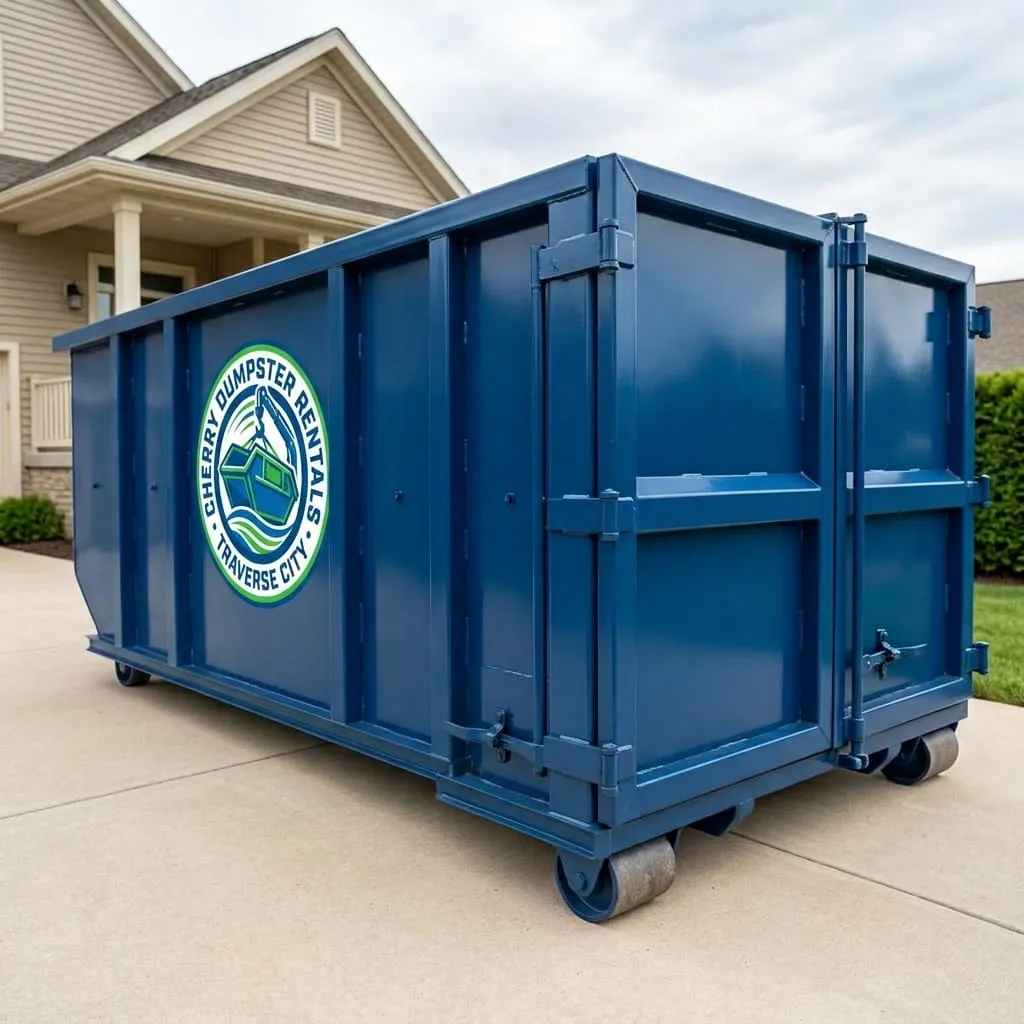
Picking a dumpster size is the one decision that decides whether your project runs smooth or turns into a headache. Order too small and you're calling for a second haul or a swap halfway through a tear-off with debris piling up in the driveway. Order too big and you're paying for empty air and cubic yards you never filled. After years of dropping roll-offs across Grand Traverse County, from lakefront cottages on the bay to orchard properties out on Old Mission Peninsula, we've learned that most folks guess wrong the first time, and they almost always guess low. This guide walks you through the real sizes we run, what each one actually holds, the weight limits that trip people up, and how to match a bin to the job you're actually doing here in northern Michigan.
The Four Roll-Off Sizes We Run
Roll-off dumpsters are measured in cubic yards, which describes the volume the container holds, not the weight. When you hear "10-yard" or "30-yard," that's the number of cubic yards of material the box is rated to carry. The footprint and height change with each size, and that matters a lot when you're fitting one onto a narrow cottage lot or a snowbanked winter driveway. Here's how the four common sizes break down.
| Size | Typical Dimensions (L x W x H) | Holds (pickup loads) | Best For |
|---|---|---|---|
| 10-yard | 12 ft x 8 ft x 3.5 ft | 3-4 | Small cleanouts, heavy debris |
| 15-yard | 16 ft x 8 ft x 4 ft | 5-6 | Mid-size remodels, roofing |
| 20-yard | 22 ft x 8 ft x 4.5 ft | 7-8 | Large cleanouts, flooring |
| 30-yard | 22 ft x 8 ft x 6 ft | 9-12 | Whole-home reno, new construction |
Notice that the 20-yard and 30-yard share the same footprint on the ground. The 30 is just taller, which means it holds more volume in the same driveway space. That's a useful trick when you've got room for the box but a lot of bulky, lightweight material like drywall, cabinetry, or old furniture to throw out.
The 10-Yard: Small But Mighty for Heavy Stuff
The 10-yard is our smallest roll-off, and it's the one people underestimate the most. It only holds about three or four pickup-truck loads, so it's not the bin for a big cleanout. But it earns its keep on one specific type of job: heavy debris. If you're tearing out a concrete patio, ripping up an old brick walkway, hauling off dirt from a foundation dig, or stripping a couple layers of asphalt shingles, the 10-yard is exactly what you want. Dense material hits the weight limit long before it fills the box, and a small container keeps you from getting a nasty overage bill. We'll come back to weight in a minute, because it's the number that surprises people. If you're weighing this against the next step up, our 10-yard dumpster page lays out exactly what fits.
The 15-Yard: The Northern Michigan Workhorse
The 15-yard is the size we drop most often for Traverse City homeowners, and for good reason. It's big enough for a real project but still fits comfortably in a standard driveway without blocking the whole thing. A single-bathroom gut, a kitchen refresh, a garage cleanout, a mid-size roofing job, or clearing out a cottage after a long winter all land squarely in 15-yard territory. It's the sweet spot for most residential work where you've got a mix of materials but aren't demolishing the whole structure. The 15-yard dumpster handles the majority of jobs we see between May and October.
The 20-Yard: When One Room Becomes Three
Step up to a 20-yard when the project grows. Multi-room flooring replacement, a larger kitchen-and-bath combo remodel, a full basement cleanout, or a mid-size roof tear-off all call for this size. It's still driveway-friendly at 22 feet long, but the extra height over the 15 gives you real breathing room. This is also the go-to for estate cleanouts and getting a lakefront property ready to list, when decades of accumulated stuff has to go all at once. Look at the 20-yard dumpster if you're not sure whether the 15 will cut it, because a swap-out mid-project costs more than sizing up from the start.
The 30-Yard: Big Projects and New Builds
The 30-yard is for the big lifts: whole-home renovations, additions, new construction, tearing a cottage down to the studs, or a major cleanout where you're clearing an entire house at once. Because it's tall, it swallows bulky, lightweight debris that would overflow a smaller bin. New builds out in the townships and larger construction jobs almost always want the 30-yard dumpster. Just keep in mind you need the space and clear overhead access for a container this size, and it's not the right choice for anything heavy.
Weight Limits and Overage Fees: The Part People Miss
Here's where a lot of first-timers get burned. Every dumpster comes with an included weight allowance, usually measured in tons. Go over that allowance and you pay an overage fee for each additional ton, weighed at the landfill or transfer station. Volume tells you if the material will fit; weight tells you if you can legally and affordably haul it.
This matters enormously with dense debris. A 10-yard box full of concrete can weigh far more than a 30-yard box full of drywall and old furniture. That's the whole reason we steer heavy material into small containers. If you loaded concrete, dirt, brick, or a triple-layer shingle tear-off into a 20 or 30-yard bin and filled it to the top, the truck couldn't safely lift it and you'd be looking at serious overage charges. As a rule of thumb here in Grand Traverse County:
- Concrete, brick, dirt, sand, gravel: 10-yard only, and don't fill it past halfway on the heaviest material.
- Asphalt shingles: 10 or 15-yard, depending on how many layers you're stripping.
- General household junk, wood, drywall, furniture: lightweight, so go by volume and size up freely.
- Mixed renovation debris: somewhere in between, so tell us what you're tossing and we'll match the allowance.
When in doubt, tell us what's going in the box. We'd rather size it right up front than surprise you with a bill. If you want to see what's allowed and what isn't, our guide on what can go in a dumpster covers the prohibited items, and the Traverse City dumpster rental cost breakdown explains how weight allowances factor into pricing.
Matching Size to the Job
Let's get specific, because "it depends" doesn't help you when the contractor's showing up Monday.
Bathroom Remodel
A single-bathroom gut, tile, vanity, tub, and fixtures, fits a 10 or 15-yard. Tile is heavy, so if you're pulling up a lot of it, lean toward the 10 or keep the 15 loaded conservatively.
Kitchen Remodel
Cabinets, countertops, flooring, and drywall from a kitchen usually fill a 15-yard, sometimes a 20 if you're gutting a large kitchen down to the studs. Cabinetry is bulky but light, so volume drives this one.
Whole-Home Renovation
Tackling multiple rooms or the entire house means a 20 or 30-yard. New construction and additions almost always want the 30. This is where our construction dumpster rental service comes in, sized and scheduled around your build phases.
Roof Tear-Off
Shingles are dense. A single-layer tear-off on an average home fits a 15-yard; two or three layers, or a larger roof, may need a 20 but watch the weight allowance closely. We often recommend a 10 or 15 for roofing specifically because of how much shingles weigh.
Basement, Crawlspace, and Cottage Cleanout
This is bread-and-butter work Up North. A basement or crawlspace cleanout runs 15 to 20 yards depending on how much has accumulated. Seasonal cabin and cottage cleanouts, clearing out a place after winter or prepping a vacation home for sale, typically land at 15 or 20-yard. If it's decades of stuff, go 20. Our residential dumpster rental service is built for exactly these jobs.
The Traverse City Angle
Sizing a dumpster in northern Michigan comes with a few local wrinkles the big national outfits don't think about.
Lakefront cottages and vacation homes. Properties along Grand Traverse Bay and the inland lakes often have narrow, sloped, or gravel driveways with tight turnarounds and mature trees. A 30-yard box may not physically fit or may not be worth the access hassle. We frequently recommend a 15 or 20-yard for cottage projects simply because it's easier to place and pull. Tell us about your access and we'll size accordingly.
Short-term rental turnovers. With so many vacation rentals around the region, owners flipping a property between seasons, replacing furniture, flooring, or refreshing a whole unit, do well with a 15 or 20-yard. It's fast, it fits, and it clears the old stuff in one drop.
Orchard and winery-country properties. Out on Old Mission and Leelanau, larger rural parcels give you room for a 30-yard, and barn cleanouts, outbuilding demos, and property clearing take advantage of the bigger box. Access is rarely the issue out here; volume is.
Harsh winters and freeze-thaw. Our winters are no joke, and freeze-thaw cycles wreck concrete, driveways, and foundations. Spring often brings concrete removal and repair work, which means heavy-debris 10-yard bins. Winter placement also matters: we need a plowed, accessible, level spot to set and retrieve the container, so keep that in mind when scheduling cold-season work.
Basements and crawlspaces. Older Traverse City homes and cottages have basements and crawlspaces that collect a lifetime of belongings and the occasional water-damaged mess. These cleanouts almost always run larger than folks expect, so size up.
Still Not Sure? Ask Us
The honest truth is that the right size depends on your specific job, your driveway, and what you're throwing away. When people call us unsure, we ask three questions: what's the project, what materials are going in, and where's it getting parked. From those answers we can tell you exactly which box to take, and we'd rather spend two minutes on the phone than have you guess wrong. Browse our full roll-off dumpster rental lineup, or better yet, just call us. We've been sizing bins for Grand Traverse County projects long enough to get it right the first time, and we'll save you the cost of a second haul or an overage surprise.
Ready to book the right size? Call Cherry Dumpster Rentals at (231) 642-9756 or reach out through our contact page and we'll match a dumpster to your Traverse City project today.

Founder, Cherry Dumpster Rentals — sharing straight advice from more than 15 years of local hauling experience.
Frequently Asked Questions
What size dumpster do I need for a single-bathroom remodel?
A 10 or 15-yard roll-off handles most single-bathroom gut jobs. If you're pulling up a lot of tile, which is heavy, lean toward the 10-yard or keep a 15-yard loaded conservatively to stay under the weight limit. For a kitchen or larger project, step up to a 15 or 20-yard.
Why do I need a small dumpster for concrete and other heavy debris?
Heavy materials like concrete, brick, dirt, and shingles hit the container's weight limit long before they fill the box. A 10-yard bin keeps you under the truck's safe lifting capacity and avoids steep overage fees. We recommend the 10-yard for concrete, dirt, and dense demolition debris, and often suggest not filling it past halfway on the heaviest loads.
What happens if I go over the dumpster's weight limit?
Every dumpster includes a set weight allowance measured in tons. If your loaded container weighs more when it's weighed at the transfer station, you pay an overage fee for each additional ton. That's why matching material type to the right size matters. Tell us what you're throwing out up front and we'll set the right allowance so there are no surprises.
Will a dumpster fit in my lakefront cottage driveway?
Often yes, but narrow, sloped, or gravel cottage driveways around Grand Traverse Bay can make a 30-yard box impractical. We frequently recommend a 15 or 20-yard for lakefront and vacation-home projects because they're easier to place and retrieve. Just describe your access when you call and we'll pick a size that fits your spot.
What size dumpster is best for a cottage or cabin cleanout?
Seasonal cabin and cottage cleanouts, along with basement and crawlspace clearouts, typically run 15 to 20 yards. These jobs almost always produce more than owners expect, especially in older Up North homes, so we usually recommend sizing up to a 20-yard to clear everything in a single haul.