Living and working around Grand Traverse Bay comes with a shared responsibility: what we throw away has a direct line to the water, the soil, and the lakes that make northern Michigan special. Recycling and waste disposal in Traverse City and Grand Traverse County are not complicated once you know the system, but the rules do vary by municipality, hauler, and material. This guide walks through how local waste and recycling actually work, what belongs in curbside bins versus what needs a transfer station or a dumpster, and how to handle the trickier categories like household hazardous waste, electronics, construction debris, and storm cleanup. Because programs, dates, and locations change, always confirm the current details with the City of Traverse City, Grand Traverse County, or Michigan EGLE before you haul anything.
How Waste and Recycling Work in Grand Traverse County
There is no single countywide trash pickup that covers every address the same way. Instead, residential garbage and recycling collection are handled by private haulers and by individual townships and the City of Traverse City, so the exact bin, schedule, and accepted-materials list depend on where you live. American Waste is one of the major private providers in the region, and the county coordinates resource recovery and recycling programs alongside municipal services. City residents typically have curbside options arranged through the City, while township and rural residents may subscribe directly with a hauler or self-haul to a drop-off site.
The practical takeaway is simple: before you assume something is recyclable at the curb, check your specific service. A rule that applies in the City of Traverse City may differ in Garfield, Peninsula, or East Bay Township. When in doubt, the county's resource recovery information and your hauler's guidelines are the authoritative sources.
What Goes in Curbside Recycling
Curbside recycling in the Traverse City area generally focuses on clean, dry, and empty materials. While every program has its own list, the commonly accepted items across most local single-stream and dual-stream programs include:
- Corrugated cardboard, flattened and free of food grease
- Paper, including newspaper, office paper, magazines, and mail
- Paperboard such as cereal and cracker boxes
- Metal food and beverage cans, rinsed
- Glass bottles and jars, rinsed (check whether your program accepts glass curbside or only at drop-off)
- Plastic bottles and jugs, typically resin codes #1 and #2, empty and rinsed
Contamination is the biggest problem local recycling programs face. A single greasy pizza box, a half-full container, or a tangle of plastic bags can turn an otherwise good load into trash. Keep recyclables loose in the cart rather than bagged, and when you are unsure about an item, it is better to leave it out than to wish-cycle it in.
What Does Not Belong in Curbside Recycling
- Plastic bags, film, and bubble wrap (return clean bags to store drop-offs where available)
- Styrofoam and polystyrene foam
- Food waste and heavily soiled paper
- Scrap metal, appliances, and propane tanks
- Electronics, batteries, and light bulbs
- Construction debris, wood, drywall, and shingles
- Yard waste and brush
- Household chemicals, paint, and hazardous materials
Most of the items on that list have a proper home somewhere else in the county system, whether that is a drop-off center, a transfer station, a special collection event, or a dumpster for larger volumes.
The Transfer Station and Recycling Drop-Offs
For materials that do not fit curbside collection, or for residents without curbside service, the regional transfer station and recycling drop-off centers are the backbone of the system. American Waste operates transfer and disposal facilities serving the Grand Traverse region, where household trash, bulky items, and many recyclables can be dropped off, usually for a per-load or per-weight fee. Grand Traverse County resource recovery programs also support recycling drop-off locations where residents can bring sorted materials.
Transfer stations are especially useful when you have more than a curbside cart can hold: a garage cleanout, a move, a downsizing, or seasonal decluttering. Fees, hours, and accepted materials differ by facility, so call ahead or check the current posted information before loading your truck. Bringing sorted, clean material and knowing what the site accepts will save you time and money at the scale.
| Material | Where it usually goes |
|---|---|
| Paper, cardboard, cans, bottles | Curbside recycling or drop-off center |
| Household trash (small volume) | Curbside cart or transfer station |
| Bulky items and furniture | Transfer station or dumpster |
| Appliances and scrap metal | Scrap metal recycler or transfer station |
| Electronics | E-waste drop-off or collection event |
| Paint, chemicals, batteries | Household hazardous waste program |
| Construction and demolition debris | Dumpster or C&D disposal facility |
| Yard waste and brush | Composting site or yard waste service |
Household Hazardous Waste and E-Waste
Paint, solvents, motor oil, pesticides, pool chemicals, fluorescent bulbs, and similar products should never go in the trash, down a drain, or onto the ground. In a watershed community like ours, a spilled gallon of the wrong thing can reach groundwater or the bay. Grand Traverse County and the City periodically host household hazardous waste (HHW) collection events, and there are permanent or seasonal options depending on the year. Because these dates, locations, and accepted materials change from season to season, do not rely on a fixed schedule: check the current City of Traverse City and Grand Traverse County resource recovery listings, or Michigan EGLE guidance, before you plan a drop-off.
Electronics are their own category. Old TVs, monitors, computers, printers, and phones contain metals and components that should be recovered rather than landfilled, and Michigan encourages electronics recycling through manufacturer take-back programs and local collection events. Look for scheduled e-waste days or standing drop-off partners in the region, and wipe your personal data from any device before you recycle it. Rechargeable and lithium batteries deserve special care because they can spark fires in trucks and facilities, so keep them out of both trash and curbside recycling and use designated battery drop-offs.
Construction and Demolition Debris
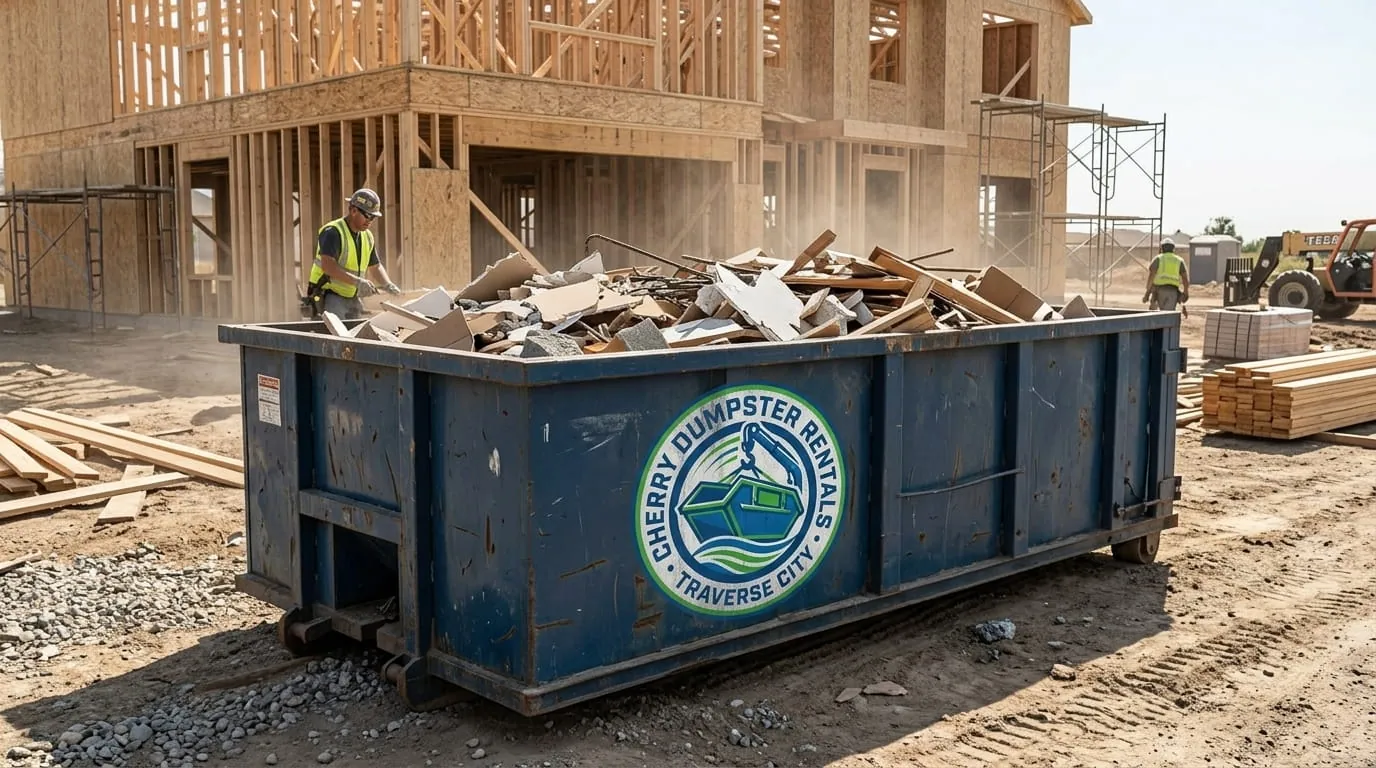
Remodels, tear-offs, and new builds generate a stream of material that curbside service is not designed for. Concrete, brick, lumber, drywall, roofing shingles, flooring, and fixtures add up fast and are heavy. A lot of this material can be diverted from the landfill: clean wood, metal, cardboard packaging, and even some concrete and asphalt can often be recycled or reused when they are separated on site. Deconstruction and salvage of usable cabinets, doors, and fixtures keeps good material in circulation and out of the waste stream.
For the debris that cannot be reused, a roll-off dumpster is usually the most efficient and compliant path, keeping loose material contained rather than piled where wind and rain can carry it toward storm drains and the bay. If you are planning a project, our guide on how to dispose of construction debris walks through separating recyclables from landfill waste and staging a jobsite so cleanup is smooth. And if you are not sure whether a particular material can go in the container, review what can go in a dumpster before you start loading.
Yard Waste and Storm Debris
Northern Michigan generates plenty of organic waste, from spring cleanup and fall leaves to the branches and brush that come down after summer storms and winter wind. Yard waste is banned from Michigan landfills for good reason: it composts into valuable soil and takes up space when buried. Many local programs offer seasonal yard waste collection or accept leaves, grass, and brush at composting drop-off sites. Keep yard waste separate from trash and recycling so it can be composted rather than landfilled.
After a big storm, the volume can overwhelm normal collection. Downed limbs, split trunks, and a season of accumulated brush may be more than curbside service or a few trips to a drop-off can handle. For those larger jobs, our yard waste removal service can clear brush, limbs, and green debris quickly so your property is safe and tidy again without dozens of car trips.
When a Dumpster Makes Sense
Curbside carts, drop-off centers, and the transfer station cover the day-to-day, but some jobs call for a container on site. A roll-off dumpster is the right tool when you have a concentrated burst of waste that would otherwise take many loads: a whole-house cleanout, an estate or downsizing project, a garage or basement that has been filling up for years, a flooring or roofing job, or a major landscaping overhaul. Instead of hauling load after load, you fill one container on your own schedule and we handle the disposal and diversion.
For most homeowner projects, a residential dumpster rental gives you a right-sized container dropped in your driveway, and if you would rather not touch the heavy lifting at all, our junk removal crew can load and haul it for you. Sizing the container correctly matters: too small and you pay for a second haul, too large and you pay for air. When you call us we will ask about the project, the material, and the space so you get the right fit the first time.
Protecting Grand Traverse Bay
Every disposal decision in this county eventually touches the water. Grand Traverse Bay, the inland lakes, and the rivers that feed them are the reason so many of us are here, and they are unforgiving of shortcuts. Litter and loose debris wash into storm drains, chemicals seep into groundwater, and improperly handled waste can foul shorelines that took generations to protect. Responsible disposal is not just about following rules; it is about keeping the water clean for the next boat launch, the next swim, and the next generation of anglers and paddlers. Recycle what you can, keep hazardous material out of the ground, compost your yard waste, and contain the rest so nothing ends up where it does not belong.
When your project is bigger than the curb can handle, Cherry Dumpster Rentals is here to make responsible disposal easy across Traverse City and Grand Traverse County. Call us at (231) 642-9756 or reach out through our contact page to talk through your cleanout, choose the right container, and keep our bay and lakes clean in the process.
Founder, Cherry Dumpster Rentals — sharing straight advice from more than 15 years of local hauling experience.
Frequently Asked Questions
What can I put in curbside recycling in Traverse City?
Most local programs accept clean, dry, empty materials: flattened cardboard, paper, metal cans, glass bottles and jars, and plastic bottles and jugs (usually #1 and #2). Keep items loose rather than bagged, rinse food containers, and leave out plastic bags, foam, food waste, and electronics. Because accepted materials vary by hauler and municipality, confirm your specific list with the City of Traverse City or Grand Traverse County.
Where do I take household hazardous waste and electronics?
Paint, chemicals, oil, batteries, bulbs, and electronics should never go in the trash or curbside recycling. Grand Traverse County and the City periodically host household hazardous waste and e-waste collection events, and some standing drop-off options exist. Dates and locations change, so check the current City of Traverse City, Grand Traverse County, or Michigan EGLE listings before you go, and wipe personal data from any device you recycle.
What do I do with construction and demolition debris?
Curbside service is not designed for concrete, lumber, drywall, or shingles. Separate what can be recycled or salvaged, such as clean wood, metal, and cardboard, then use a roll-off dumpster or a construction and demolition facility for the rest. A dumpster keeps loose debris contained on the jobsite, which protects storm drains and the bay from windblown or washed-away material.
How does yard waste and storm debris get handled?
Yard waste is banned from Michigan landfills, so leaves, grass, and brush should be composted through seasonal collection or drop-off composting sites rather than thrown in the trash. After major storms the volume can be too much for normal collection, in which case a yard waste removal service or a dumpster can clear downed limbs and brush quickly and responsibly.
When should I rent a dumpster instead of using drop-off sites?
A dumpster makes sense when you have a concentrated burst of waste that would take many trips to a transfer station, such as a whole-house or estate cleanout, a garage or basement clearing, or a roofing, flooring, or landscaping project. Renting one container you fill on your own schedule is usually faster and cheaper than repeated hauls, and we can help you size it correctly so you avoid a second pickup or paying for empty space.