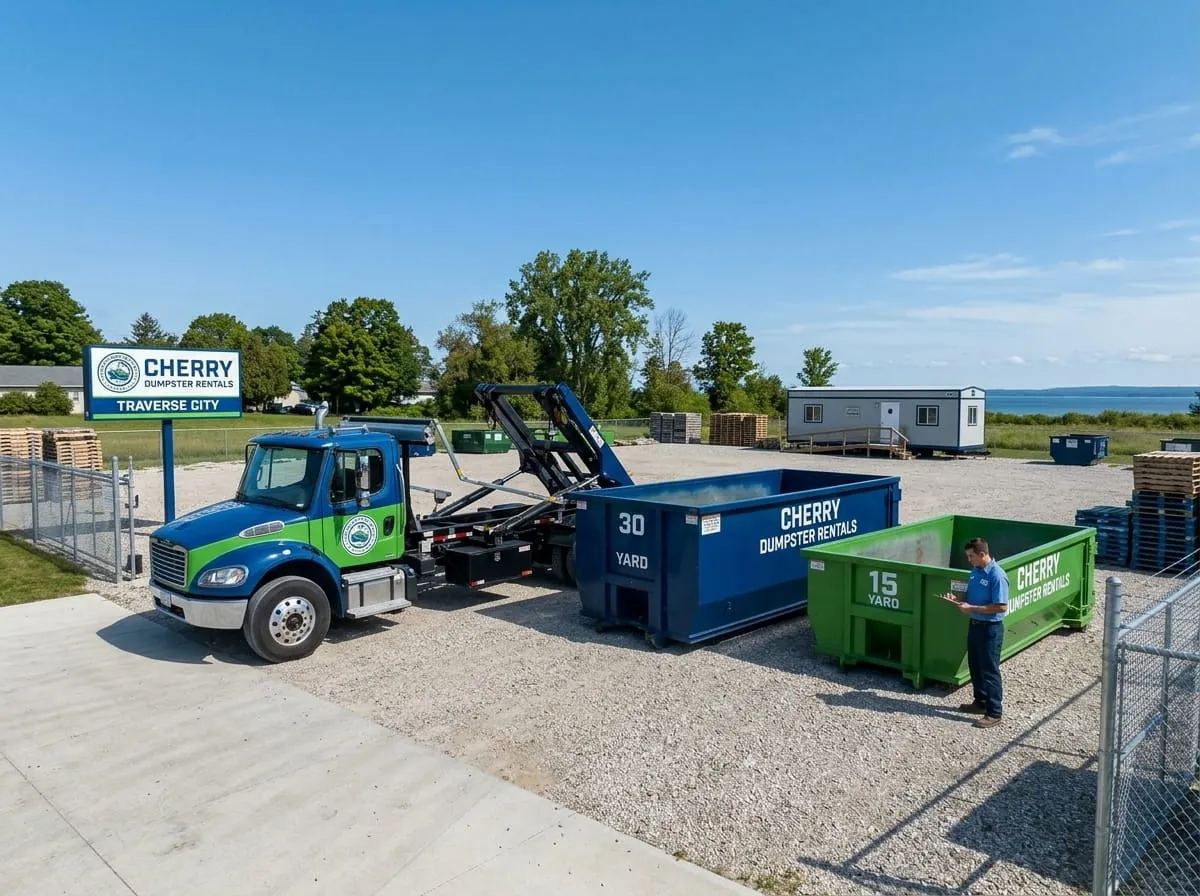
One of the most common questions we hear at Cherry Dumpster Rentals is a simple one: "Can I just throw everything in?" It's a fair question. When you're staring down a garage packed to the rafters, a kitchen you're gutting, or a yard littered with limbs after a Grand Traverse County windstorm, the appeal of one big container you can fill with anything is obvious. The honest answer is that a roll-off dumpster handles the vast majority of what a Traverse City home or job site produces, but a short list of materials are strictly off-limits, and a few more come with special handling. Knowing the difference before you start saves you money, keeps your rental on schedule, and helps protect the very thing that makes northern Michigan special, from Grand Traverse Bay to the inland lakes.
Why There Are Rules at All
Dumpster restrictions aren't arbitrary. Everything you load eventually ends up at a licensed transfer station or landfill governed by the Michigan Department of Environment, Great Lakes, and Energy (EGLE). Michigan's solid waste regulations, along with federal law, ban certain materials from municipal landfills because they can contaminate groundwater, release toxic gases, catch fire, or endanger the workers who handle the load. Around here, that groundwater matters more than most places. Traverse City sits on a sole-source aquifer, and improperly dumped chemicals, paint, or automotive fluids can migrate toward the bay and the lakes that draw people to this region in the first place. When we say a material is prohibited, it's usually because a state or federal rule requires it, and following those rules is how we all keep the water clean.
What You CAN Put in a Dumpster
The good news is that the accepted list is long. For the overwhelming majority of cleanouts and renovations, a roll-off is exactly the right tool. Here's what goes in without a second thought:
- Household junk and clutter: boxes, clothing, toys, non-electronic housewares, packaging, and general trash from a decluttering or moving project.
- Furniture: couches, tables, chairs, dressers, shelving, and cabinetry. (Mattresses and box springs are a special case covered below.)
- Construction and demolition debris: lumber, drywall, plaster, trim, framing, subfloor, insulation, and general remodel waste.
- Yard and storm debris: branches, brush, leaves, small stumps, and the tangle of downed limbs a northern Michigan storm leaves behind.
- Roofing material: asphalt shingles, underlayment, and tear-off debris from a re-roof.
- Flooring: carpet, padding, tile, laminate, hardwood, and vinyl.
- Bagged household waste and non-hazardous jobsite trash.
If your project is mostly the items above, you're in good shape. Choosing the right container size is the next step, and our residential dumpster rental team can help you match a bin to the scope of your cleanout or remodel so you're not paying for space you don't need or running out halfway through.
What You CANNOT Put in a Dumpster
This is the list that actually matters, because putting a prohibited item in the bin can result in surcharges, a refused load, or an environmental hazard. These materials are banned or restricted at Michigan landfills and cannot go in your roll-off:
- Hazardous waste of any kind — solvents, pesticides, herbicides, pool chemicals, and cleaning chemicals.
- Paint, stains, and finishes — wet or liquid paint is prohibited (fully dried, hardened latex paint cans are sometimes acceptable; ask us first).
- Automotive and other chemicals — motor oil, antifreeze, gasoline, brake fluid, and similar liquids.
- Tires — banned from Michigan landfills entirely.
- Batteries — car batteries, lithium, and rechargeable batteries (a real fire risk in a packed load).
- Appliances containing Freon — refrigerators, freezers, air conditioners, and dehumidifiers must have refrigerant professionally removed first.
- Electronics (e-waste) — TVs, computers, monitors, and printers are banned under Michigan's electronics recycling framework.
- Mattresses and box springs — accepted only with an added fee (see below).
- Propane tanks — pressurized and a serious explosion hazard.
- Asbestos — requires certified abatement and specialized disposal.
- Medical waste — sharps, pharmaceuticals, and biohazard material.
Why These Items Are Banned, and Where They Should Go Instead
Understanding the "why" makes the rules easier to follow, and in the Grand Traverse area there's usually a convenient, legal place for each of these materials.
Hazardous Waste, Paint, and Chemicals
Liquids and chemicals don't stay contained in a landfill. They leach into soil and groundwater, and given our shallow aquifer and proximity to the bay, that's a genuine threat to local drinking water and lake health. Grand Traverse County residents can bring paint, solvents, automotive fluids, and other household hazardous waste to the county's Household Hazardous Waste collection program, which is designed to capture exactly these materials safely. Never pour them down a drain, into the ground, or into a storm sewer that ultimately reaches the bay.
Tires and Batteries
Tires trap methane and can literally float to the surface of a landfill, damaging the liner. Most tire retailers in Traverse City accept old tires for a small recycling fee. Batteries contain heavy metals and, in the case of lithium cells, are a leading cause of fires in trucks and transfer stations. Auto parts stores take lead-acid car batteries (often for a core credit), and many hardware and electronics retailers collect rechargeable and lithium batteries for recycling.
Appliances with Freon and Electronics
Refrigerators, freezers, and AC units contain refrigerants that are potent greenhouse gases and are federally regulated; the Freon must be professionally recovered before disposal. Electronics contain lead, mercury, and other toxins and are banned from Michigan landfills. Both are handled through county recycling events and dedicated e-waste collection. If you'd rather not haul them yourself, our junk removal service can take appliances and electronics off your hands and route them to the right facility.
Mattresses and Propane Tanks
Mattresses aren't hazardous, but their springs and foam jam landfill compactors, so they carry a disposal surcharge. We can still take them; just let us know so we can add the fee up front and avoid a surprise. Propane tanks are pressurized and can explode when crushed. Empty tanks can often be exchanged or returned to propane dealers and hardware stores in the area.
Weight-Sensitive Materials: Concrete, Dirt, and Brick
A separate category isn't banned but needs special planning: heavy inert materials like concrete, brick, asphalt, dirt, rock, and gravel. These aren't dangerous, but they're astonishingly heavy. A dumpster filled with concrete can exceed the weight a truck is legally allowed to haul on Michigan roads long before the bin looks full. Overloaded containers are unsafe and, in some cases, illegal to transport. For that reason we typically provide a dedicated, smaller "clean fill" dumpster for these materials and ask that you keep them separate from your general debris. If your project involves a torn-out patio, an old foundation, or a load of soil from a landscaping job, call us first so we can set you up with the right container and a clear weight limit. This is also true for large volumes of yard debris and soil after storm cleanup, where our yard waste removal option is often the better fit.
Protecting the Bay and the Lakes
Northern Michigan's waterfront cottages and lakeside cabins generate a particular kind of cleanout. Estate cleanouts, deck rebuilds, and end-of-season purges often surface decades of accumulated stuff: old paint cans in the crawlspace, a rusted propane tank behind the shed, a dead chest freezer in the boathouse. It's tempting to toss it all in one bin and be done. But these are exactly the items that, if they reach a landfill or worse are dumped near the shoreline, put Grand Traverse Bay and our inland lakes at risk. Sorting the restricted items out and disposing of them properly is a small effort that protects the water everyone here loves. When in doubt, set the questionable item aside and ask us.
A Simple Rule of Thumb
If it's a solid, non-hazardous material that came out of a house, a yard, or a construction project, it almost certainly goes in the dumpster. If it's a liquid, a chemical, something pressurized, something with a battery or a plug, or something that could poison the ground, it stays out and goes to the appropriate recycling or hazardous-waste channel. When you're not sure, a quick phone call is faster and cheaper than a refused load. For more on local recycling and disposal options, our guides on recycling and waste disposal in Traverse City and disposing of construction debris walk through the specifics.
Rent With Confidence
At Cherry Dumpster Rentals, we'd rather answer a "can I throw this away?" question up front than hit you with a surprise fee later. Our team knows Grand Traverse County's disposal rules inside and out and will steer you toward the right container and a clean, compliant load every time. Ready to get started, or have a tricky item you're not sure about? Browse our full range of services or reach out through our contact page. You can also call us directly at (231) 642-9756 and we'll get a dumpster to your Traverse City driveway or job site, no guesswork required.
Founder, Cherry Dumpster Rentals — sharing straight advice from more than 15 years of local hauling experience.
Frequently Asked Questions
Can I put a refrigerator or freezer in the dumpster?
Not with the Freon still in it. Refrigerators, freezers, air conditioners, and dehumidifiers contain federally regulated refrigerant that must be professionally recovered before the appliance can be disposed of. Once the Freon is removed and the unit is tagged, it can often be recycled as scrap metal. Our junk removal team can handle these appliances and route them to the proper facility if you'd rather not manage it yourself.
Where do I take paint and household chemicals in Traverse City?
Liquid paint, solvents, pesticides, pool chemicals, and automotive fluids cannot go in a dumpster because they can contaminate our shallow aquifer and reach Grand Traverse Bay. Grand Traverse County runs a Household Hazardous Waste collection program built to accept exactly these materials. Fully dried, hardened latex paint cans are sometimes acceptable in the bin, but check with us first.
Why is there a fee for throwing away a mattress?
Mattresses and box springs aren't hazardous, but their coiled springs and foam wrap around and jam landfill compaction equipment, so disposal sites charge extra to handle them. We can still take your mattress; just tell us in advance so we can add the flat fee up front and you're not surprised on the final bill.
Can I fill a dumpster with concrete, dirt, or brick?
These materials are allowed but are extremely heavy, and a full bin can exceed what a truck is legally permitted to haul on Michigan roads. For concrete, brick, asphalt, dirt, and gravel we provide a dedicated clean-fill dumpster with a set weight limit and ask that you keep them separate from general debris. Call us before your project so we can size it correctly.
What happens if I accidentally put a banned item in the bin?
Prohibited items like tires, batteries, electronics, or chemicals can result in a surcharge, a refused load, or having to remove and re-sort the material, all of which cost time and money. If you spot a questionable item mid-project, set it aside and give us a call at (231) 642-9756. A quick question is always cheaper than a rejected load.