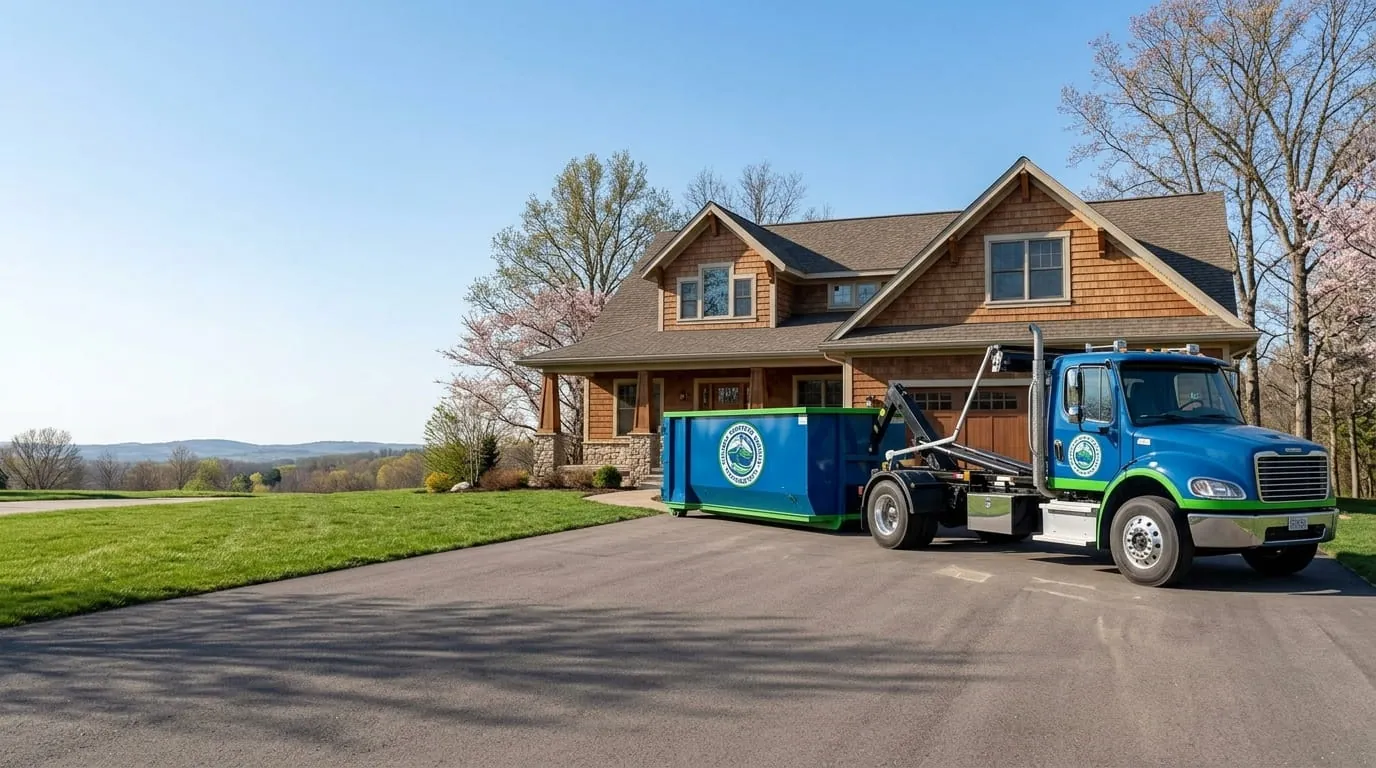
One of the first questions we hear from homeowners and contractors across Grand Traverse County is simple: do you actually need a permit to put a roll-off dumpster on your property? The short answer is that most residential and commercial jobs in Traverse City do not require any permit at all, because the container sits on private property. The longer answer depends on exactly where the dumpster lands, which neighborhood you are in, and the time of year. At Cherry Dumpster Rentals we coordinate these details every day, so this guide walks you through what applies here in Traverse City and the surrounding townships.
The Short Answer: Driveway Placement Usually Needs No Permit
If your dumpster is going to sit entirely on your own driveway, parking pad, side yard, or another spot on your private property, you generally will not need a permit from the City of Traverse City or from your township. This is the case for the large majority of the residential jobs we handle, from kitchen remodels on the Old Mission Peninsula to garage cleanouts on the west side. Private property is your property, and placing a temporary container on it is typically your right as the owner.
That said, "no city permit" does not always mean "no rules." If you live in a subdivision with a homeowners association, belong to a lake or shoreline association, or your home sits inside a historic district, there may be private or overlay rules that still apply even when City Hall does not require paperwork. We cover each of those below, because they trip up more Traverse City residents than the street-permit question does.
When a Permit Is Usually Required: Streets and the Public Right-of-Way
The moment a dumpster needs to sit on a public street, in a parking lane, on a curb, or anywhere in the public right-of-way, the picture changes. Placing a container in the public right-of-way in Traverse City typically requires a right-of-way or encroachment permit. The right-of-way is the strip the local government controls for the road, and it often extends a few feet past the visible edge of the pavement onto what looks like your front lawn. Because the exact boundary is not obvious from the curb, a placement that seems to be on your grass can still fall partly in the public right-of-way.
Who issues that permit depends on where you are:
- Inside the City of Traverse City — the permit comes from the City. Downtown, the Central Neighborhood, Old Town, and the surrounding city streets fall under the City's authority.
- In the surrounding townships — places such as Garfield, East Bay, Peninsula, Acme, Blair, or Long Lake Township handle their own local road-side placements, often in coordination with the Grand Traverse County Road Commission for county roads.
- On county roads in outlying areas — the Grand Traverse County Road Commission may be the right authority for the road frontage.
Because jurisdiction is split this way, the single most useful thing you can do is confirm which body governs your specific street before assuming anything. When you book with us, we help you figure that out so you are not chasing the wrong office.
Who Pulls the Permit and What to Expect on Timing
When a right-of-way permit is genuinely needed, either the property owner or the rental company can typically be the applicant. In practice, many homeowners prefer that we handle the coordination because we already know the container dimensions, weight, and placement details the reviewer will ask for. For contractors running multiple jobs, it is often cleaner for the general contractor or property owner to hold the permit as part of the overall project paperwork.
Timelines vary and they change from time to time, so we will not quote you a fixed number of days. Some right-of-way requests are turned around quickly; others take longer if they route through additional review, especially during the busy summer construction season or when the placement affects traffic or parking. The honest guidance is this: build in lead time and confirm the current process directly with the City of Traverse City, your township, or the Grand Traverse County Road Commission. Do not assume same-day approval. If your project timeline is tight, tell us early and we will plan the drop-off around a realistic approval window, or find a private-property placement that avoids the permit entirely.
HOA and Lake-Association Rules Around Traverse City
Grand Traverse County is full of neighborhoods and waterfront associations, and their private rules operate independently of any city or township permit. An HOA in a subdivision may limit how long a dumpster can sit out, where it can be placed, whether it must be screened from the street, or require advance notice to a board or property manager. These rules are enforced by the association, not the City, so a "no permit needed" answer from City Hall does not clear you with your HOA.
Lake and shoreline associations around Long Lake, Silver Lake, Duck Lake, Spider Lake, and the Grand Traverse Bay frontage sometimes add their own expectations, particularly about protecting shared roads, easements, and shoreline access. If you are on an association road or a shared private drive, check with your board before the container arrives. It is far easier to get a quick approval up front than to move a full dumpster after a complaint. When in doubt, review your association's covenants and reach out to the board or manager, and let us know of any placement constraints so we position the container correctly the first time.
Historic-District Considerations Near Old Town and the Central Neighborhood
Traverse City takes its historic character seriously, and homes in and around the Central Neighborhood and Old Town may fall within a historic district or overlay. Historic-district rules are usually aimed at permanent changes to a structure's appearance rather than a temporary dumpster, so a short-term container on your driveway is generally not the kind of thing that triggers a historic review. Even so, if your project itself involves exterior work — a roof, siding, windows, porches, or anything visible from the street — that work may need its own approvals separate from the dumpster.
Our practical advice for these older, tighter neighborhoods is twofold. First, if any part of the container would sit in the street or right-of-way, expect the standard right-of-way permit conversation to apply, and the historic setting can make reviewers more attentive to appearance and traffic. Second, protect the mature, sometimes fragile driveways and aprons common in these blocks. We can talk through placement and driveway protection so a heavy roll-off does not leave a mark on an original concrete or brick surface.
Winter, Snow Routes, and Plowing
Winters here are real, and they matter for dumpster placement. From roughly late fall through early spring, the City and townships need clear streets for plowing, and a container sitting in a street, parking lane, or right-of-way can obstruct snow removal. During snow season, right-of-way placements draw extra scrutiny, and a dumpster left where it blocks a plow route can become a genuine problem. On designated snow routes, on-street placement may be restricted outright when plowing is active.
This is one more reason we steer winter jobs toward driveway placement whenever the site allows. A container on your own driveway keeps the street clear, keeps you clear of snow-removal conflicts, and keeps your project moving even after a lake-effect dump. If a driveway drop simply is not possible in winter, we will work through the right-of-way and snow-route considerations with the appropriate local office before scheduling.
Placement, Marking, and Being a Good Neighbor
Whether or not a permit is involved, safe and visible placement protects you and everyone using the street. For any placement near or on a roadway, the container should be positioned so it does not block sight lines at intersections or driveways, and it should be visible to passing traffic. Reflective markers or safety cones at the corners help at night and in low light, and are sometimes a condition of a right-of-way permit. Keep the container clear of fire hydrants, storm drains, water shutoffs, and mailboxes, and leave room for pedestrians on sidewalks.
On private driveways, the priorities shift to protecting the surface underneath. We use boards or protective material under the container's contact points to guard asphalt and concrete, and we plan the approach so the delivery truck does not have to maneuver over soft ground or a fragile apron. A little planning here prevents cracked concrete and rutted lawns.
How Our Team Helps You Avoid a Street Permit Altogether
The best permit is the one you never need. Most of the time, a well-planned driveway or on-site placement keeps your dumpster entirely on private property and out of the permit conversation. Here is how we get there:
- We size the container to your space. Choosing the right roll-off dimensions often means the difference between a clean driveway fit and spilling into the street.
- We plan the drop and pickup angles so the truck can place and retrieve the container without needing the roadway as a staging area.
- We ask about your surface and slope up front, so we bring protection and position the container where it will not slide, block, or damage anything.
- We flag the tight cases early. If your lot genuinely has no room and a street placement is unavoidable, we tell you before booking and help coordinate the right-of-way permit with the City, township, or County rather than letting it become a day-of surprise.
For a deeper look at what a rental runs locally, see our guide to dumpster rental cost in Traverse City, and if you are placing a container on your own driveway, read our tips on protecting your driveway during a dumpster rental. You can also compare options on our residential dumpster rental and roll-off dumpster rental pages.
Bottom Line for Traverse City Residents
For most jobs in Traverse City and Grand Traverse County, a dumpster on your private driveway needs no permit. A dumpster in a public street or right-of-way usually does, and who issues that permit depends on whether you are inside city limits, in a township, or fronting a county road. Rules and timelines change, so confirm the current requirements with the City of Traverse City, your township, or the Grand Traverse County Road Commission, and check your HOA or lake-association covenants for any private restrictions. Whatever the situation, our team will help you plan placement, avoid a street permit where we can, and coordinate one where we cannot.
Have questions about your specific address or driveway? Get in touch with our team or call Cherry Dumpster Rentals at (231) 642-9756 and we will help you place your dumpster the right way the first time.
Founder, Cherry Dumpster Rentals — sharing straight advice from more than 15 years of local hauling experience.
Frequently Asked Questions
Do I need a permit to put a dumpster on my driveway in Traverse City?
Usually no. If the roll-off container sits entirely on your private driveway or property, the City of Traverse City and the townships generally do not require a permit. A permit typically comes into play only when the dumpster is placed on a public street or in the right-of-way. Keep in mind that an HOA or lake association may still have its own placement rules even when the City does not.
When does a dumpster placement require a permit in Traverse City?
A permit is usually required when the dumpster is placed on a public street, in a parking lane, on the curb, or anywhere in the public right-of-way. That right-of-way can extend a few feet past the visible pavement onto what looks like your lawn, so a placement can fall partly in it without being obvious. Because requirements change, confirm with the City of Traverse City, your township, or the Grand Traverse County Road Commission, and we are glad to help coordinate.
Who issues the right-of-way permit and who pulls it?
It depends on location. Inside the city, the City of Traverse City issues it; in outlying areas, the township or the Grand Traverse County Road Commission may be the right authority for county roads. Either the property owner or the rental company can typically apply. Many homeowners have us help coordinate since we already know the container's size and placement details, though contractors often prefer to hold the permit as part of their project paperwork.
Are there special rules for winter dumpster placement in Traverse City?
Yes. During snow season the City and townships need clear streets for plowing, so a dumpster in the street or right-of-way can obstruct snow removal and draw extra scrutiny, and on-street placement may be restricted on designated snow routes. This is why we steer winter jobs toward driveway placement whenever the site allows, which keeps your street clear and your project moving.
Do HOA or lake-association rules affect where I can put a dumpster?
They can, and they operate independently of any city or township permit. An HOA may limit how long a container can sit out, where it goes, or whether it must be screened, and lake or shoreline associations around lakes like Long Lake or Spider Lake may protect shared roads and easements. A 'no permit needed' answer from City Hall does not clear you with your association, so check your covenants and notify your board before the dumpster arrives.