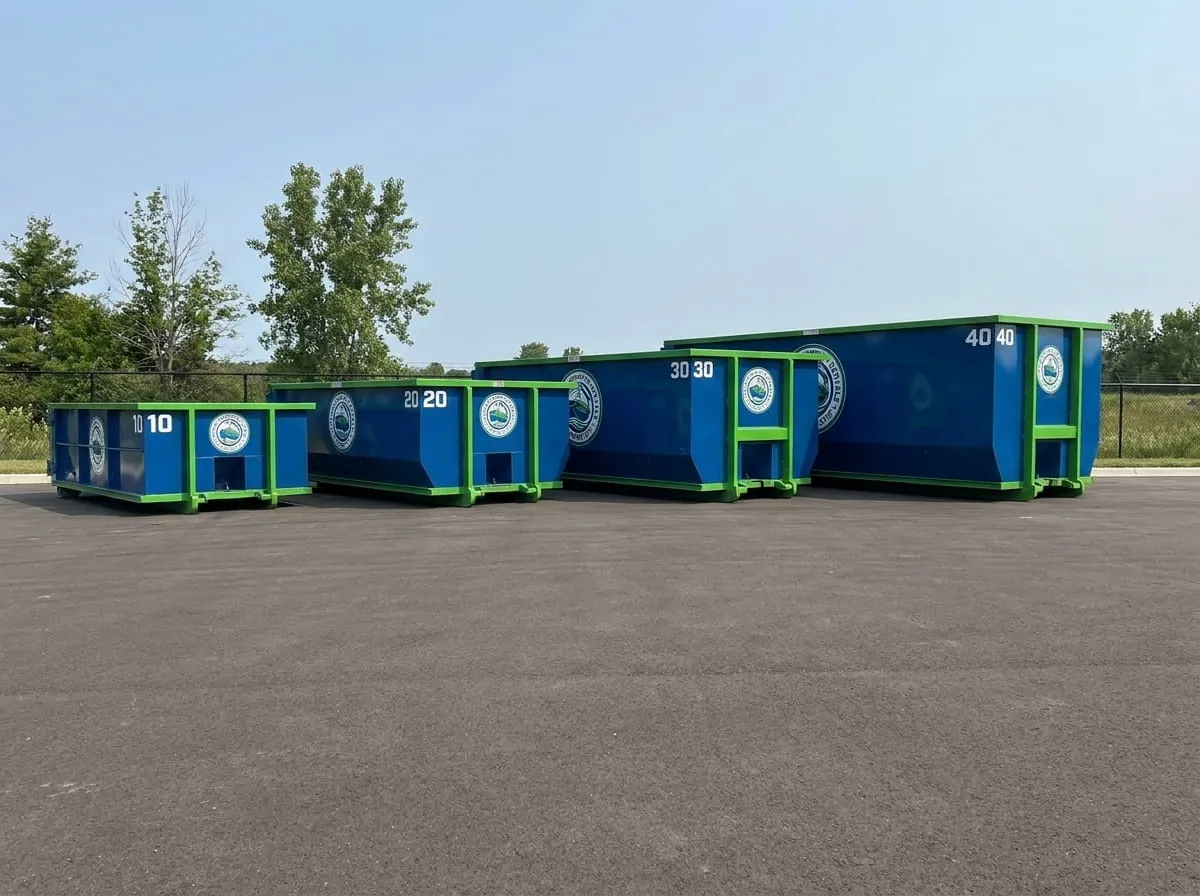
Every remodel, tear-off, and new-build in Grand Traverse County ends the same way: with a pile of construction and demolition (C&D) debris that has to go somewhere. How you handle that pile is not an afterthought. It affects your dump fees, your job-site safety, your schedule during our compressed Northern Michigan building season, and whether you stay on the right side of Michigan EGLE. This guide walks through the practical decisions Traverse City builders and remodelers make every week: what kinds of debris you are dealing with, why heavy inert material needs its own container, what actually recycles around here, and how to keep a clean, compliant container program running from footing to final punch list.
Know Your C&D Waste Streams Before the First Load
"Construction debris" is not one material. It is a dozen different waste streams that behave differently in a container, price differently at the transfer station, and recycle differently. Before you order a can, walk the scope and picture what is coming out of the structure. On a typical Traverse City project you will generate some mix of the following:
- Drywall (gypsum board): Bulky and light, but it crumbles and creates dust. Old gypsum is landfill-bound; clean new-construction scrap can sometimes be recycled or land-applied as a soil amendment.
- Dimensional lumber and engineered wood: Framing offcuts, old studs, OSB, plywood, and trim. Clean untreated wood is one of the easier streams to divert. Painted, treated, or glued engineered wood is trickier.
- Concrete, block, and brick: Foundations, slabs, footings, sidewalks, chimney rubble. This is heavy inert debris and it is in a category of its own (more on that below).
- Roofing: Asphalt shingles from a tear-off are dense and heavy. A single square of three-tab can run 200 to 250 pounds, and a full re-roof adds up fast.
- Siding: Vinyl, fiber cement, wood, and aluminum all come off exterior renovations on our lake homes and cottages. Some fractions recycle; others do not.
- Mixed C&D: Insulation, flooring, windows, doors, cabinetry, fixtures, packaging, and the general remodel debris that never sorts itself.
Naming your streams up front is what lets you make the two decisions that save the most money: whether to separate heavy inert debris into a dedicated bin, and what you can pull out to recycle instead of paying to landfill.
Why Concrete, Brick, and Dirt Need Their Own Bin
The single most expensive mistake on a demo job is throwing concrete, brick, block, and dirt into the same container as your light mixed debris. Roll-off pricing is built around weight allowances. A standard mixed-debris haul comes with a tonnage cap, and heavy inert material blows through that cap almost immediately. Concrete weighs roughly 3,700 to 4,000 pounds per cubic yard. That means a 20-yard box half-full of broken slab can weigh more than the truck is legally allowed to haul off your site.
For that reason, dedicated heavy-debris and concrete bins exist and they are worth every penny. These are typically smaller containers (10 or 15 yards) rated for the density, and they are priced on a flat inert-material basis rather than mixed-waste tonnage. When you separate at the source you get three wins: you avoid overage fees on your mixed can, you keep the container safely below road-legal weight, and you feed a material that recycles cleanly. If your project has any meaningful volume of masonry or slab, order a concrete and heavy debris bin alongside your general C&D container and instruct the crew to keep them strictly separated. The same logic applies to soil and fill from excavation. Dirt is dense, it is often accepted at different facilities than construction waste, and it should never ride in your general debris box.
Rule of thumb for the crew: if you can pick it up one-handed, it is probably light debris. If it takes two hands or a wheelbarrow, it belongs in the heavy bin.
What Actually Recycles in the Traverse City Area
Diverting material from the landfill is not just good practice, it can lower your disposal bill and it is required documentation if you are chasing green-building points. Grand Traverse County and the surrounding region have real infrastructure for this. American Waste operates transfer and disposal facilities serving the Traverse City area, and the county maintains recycling drop programs. Here is where the common streams tend to go:
- Clean wood: Untreated dimensional lumber and pallets are frequently accepted for grinding into mulch or biomass. Keep it free of nails-heavy debris where possible and keep it out of the rain if you want it accepted clean.
- Concrete, brick, and asphalt: Crushed and reused as aggregate and road base. This is the highest-value diversion on most job sites, which is another reason to keep it segregated.
- Scrap metal: Copper, aluminum, steel studs, ductwork, wiring, appliances, and rebar all have scrap value. Pull metal before it goes in the can.
- Cardboard and packaging: New-construction jobs generate mountains of it. A dedicated recycling stream keeps it out of your paid debris box.
- Asphalt shingles: Shingle recycling is available in parts of Michigan and turns tear-off into road-paving material where a processor is within haul range.
- Clean gypsum: New drywall scrap is sometimes accepted for recycling or agricultural use, which matters in our orchard and vineyard country.
Confirm current acceptance and pricing before you promise a client a diversion rate. Facility rules change with markets. Your hauler can tell you what is moving locally right now, which is one reason it pays to work with a dumpster provider who runs these routes daily. For the full rundown of what belongs in a can versus what has to be handled separately, see our guide on what can go in a dumpster.
Job-Site Container Logistics for the Short Building Season
Northern Michigan gives you a narrow window. Frost laws, lake-effect weather, and a construction season that really runs late spring through fall mean you cannot afford a container sitting idle or a swap that shows up three days late. Good roll-off logistics are part of hitting your schedule.
Sizing the container to the job
Match the box to the phase, not just the project. For a kitchen or bath remodel, an interior gut, or a cottage renovation, a 20-yard dumpster handles most of the mixed debris without eating your whole driveway. For a full tear-off, a new custom lake home, or a large demolition, step up to a 30-yard dumpster so you are not paying for extra hauls. Reserve the small heavy-debris cans for masonry and slab only.
Placement and access
Set the container on a firm, level surface where the truck has straight-line access. On our sandy soils and soft spring ground, lay plywood or planking under the wheels to protect a finished driveway and to keep the box from sinking. Keep it clear of overhead lines and low branches, both of which the truck needs clearance from during drop and pickup. On tight lake-lot sites, walk the placement with your hauler before delivery.
Loading discipline
Load heavy items low and flat, distribute weight evenly, and never load above the top rail. An overloaded or unevenly loaded box cannot be hauled legally and will trigger a return trip. Break down bulky items so you are hauling material, not air. And keep the streams honest: the moment a crew starts tossing concrete into the mixed can "just this once," your weight math falls apart.
Swap timing
On active demo, order your swaps ahead of when you think you will fill. During peak season, same-day service is not guaranteed anywhere. Build a day of buffer into the schedule. A provider who knows the county and runs local routes can turn a can around fast, which is exactly what you want when the crew is standing on a full box. Explore container options on our roll-off dumpster rental page or the dedicated construction dumpster rental service.
Diversion and LEED Basics
If you build to a green standard, or a client asks for it, waste diversion is a documented deliverable, not a vibe. LEED and similar programs award points for construction waste management, typically requiring you to divert a set percentage of C&D debris from landfill by weight or volume, and to prove it with facility receipts. The practical playbook is the same one that saves you money anyway:
- Source-separate. Clean single-stream loads (all concrete, all wood, all metal) divert far better than a mixed can that a facility has to pick through.
- Keep your tickets. Every scale ticket and recycling receipt is your paper trail. Weight-based documentation is what auditors want.
- Plan diversion before demo. Decide on the job which streams get pulled and where they go, then set up the containers to match. Retrofitting a recycling plan after the debris is mixed rarely works.
Even on projects with no formal certification, a diversion plan trims tonnage off your landfill bill and looks good to the increasingly eco-conscious clients building around Grand Traverse Bay.
Staying Compliant With Michigan EGLE Rules
Disposal in Michigan runs under the Department of Environment, Great Lakes, and Energy (EGLE), and a few rules matter to every builder:
- Use permitted facilities. C&D and general waste must go to a licensed transfer station or landfill. Illegal dumping and unpermitted on-site burial of construction debris carry real penalties. Route your material through American Waste and the Grand Traverse County transfer and landfill facilities, and keep the receipts.
- Handle regulated materials correctly. Older structures around Traverse City can contain asbestos and lead. Before demo on a pre-1980s building, an asbestos inspection is required, and regulated materials must be abated and disposed separately by qualified contractors. These never go in a standard roll-off.
- Do not burn. Open burning of construction debris, treated wood, and demolition waste is prohibited. It is not a disposal method, it is a violation.
- Manage other special wastes. Paints, solvents, adhesives, fluorescent tubes, and similar products are not general debris. Segregate them and route them to the proper hazardous or universal waste channel.
When in doubt on a specific material, ask your hauler before it goes in the box. A container provider who works in the county every day knows what the local facilities will and will not take, and that phone call is cheaper than a rejected load or a compliance problem. For a demolition-specific approach, our demolition debris removal service is built around exactly these logistics.
Put It All Together on Your Next Job
Disposing of construction debris well comes down to a short checklist: identify your waste streams, separate heavy inert material into a dedicated bin, pull recyclables before they hit a paid can, size and place your containers for the phase, keep your loading honest, and route everything through permitted EGLE facilities with the tickets to prove it. Do that and you protect your margin, your schedule, and your standing with clients and regulators alike, all through a building season that does not give you room for do-overs.
Cherry Dumpster Rentals runs these routes across Grand Traverse County and can spec the right container mix for your project. Browse all of our dumpster services, or call our team at (231) 642-9756 to get the right can on site. Ready to schedule? Contact us and we will handle the debris so you can keep building.
Founder, Cherry Dumpster Rentals — sharing straight advice from more than 15 years of local hauling experience.
Frequently Asked Questions
Can I put concrete and dirt in the same dumpster as my other construction debris?
No. Concrete, brick, block, and dirt are heavy inert materials that weigh roughly 3,700 to 4,000 pounds per cubic yard and will blow through the tonnage cap on a mixed-debris can, triggering overage fees and putting the load over road-legal weight. Order a dedicated concrete and heavy-debris bin and keep those materials strictly separated from your light mixed debris.
What construction materials recycle in the Traverse City area?
Clean untreated wood, concrete and brick (crushed into aggregate), scrap metal, cardboard, asphalt shingles where a processor is in range, and clean new-construction gypsum are all commonly diverted through American Waste facilities and Grand Traverse County programs. Source-separating each stream gets the best acceptance and pricing, so confirm current facility rules with your hauler before promising a client a diversion rate.
What size dumpster do I need for a construction or demolition project?
A 20-yard dumpster handles most kitchen and bath remodels, interior gut jobs, and cottage renovations. Step up to a 30-yard for full tear-offs, new custom builds, or large demolition. Keep masonry and slab in a separate small heavy-debris can rated for the density rather than loading it into a general container.
Do Michigan EGLE rules affect how I dispose of construction debris?
Yes. Michigan EGLE requires C&D waste to go to permitted transfer stations and landfills, prohibits open burning of construction and demolition debris, and requires asbestos inspection and separate abatement on older structures before demolition. Route material through American Waste and Grand Traverse County facilities, keep your scale tickets, and segregate paints, solvents, and other special wastes from your general debris.
How do I document waste diversion for LEED or a green-building project?
Source-separate your debris into clean single-stream loads (all concrete, all wood, all metal) so facilities can divert them, then keep every scale ticket and recycling receipt as weight-based proof. Plan which streams get pulled and where they go before demolition begins and set up your containers to match, because retrofitting a recycling plan after the debris is mixed rarely meets the required diversion percentage.