Clearing out the home of someone you love is one of the hardest jobs a family ever takes on. You are sorting through a lifetime while you are still grieving, often on a deadline set by probate, a closing date, or an out-of-town sibling's flight home. Here in northern Michigan, that home is frequently a multi-generational cottage on the water, an up-north cabin, or a farmhouse with a pole barn packed to the rafters with decades of tools, decoys, holiday decorations, and things nobody quite remembers buying. This checklist is meant to make the process calmer and more organized, so you can honor the person you lost without drowning in their belongings.
Start With Compassion, Not a Timeline
Before you carry a single box to the curb, give yourself permission to go at a humane pace where you can. Estate cleanouts fail when families try to do everything in one exhausting weekend and burn out halfway through. Break the work into sessions, bring water and snacks, and expect that certain rooms, a parent's bedroom, a workshop, a kitchen where every mug has a memory, will take far longer than their square footage suggests. If the property must sell quickly, you can still protect your emotional health by separating the tasks that require careful decisions from the ones that are pure hauling. The heavy lifting can move fast even when the sorting cannot.
First: Secure Valuables and Documents Before Anything Leaves the House
The single most important rule of any estate cleanout is that nothing goes out the door until you have secured what matters. Grief makes people move quickly, and valuables have a way of vanishing into donation piles and dumpsters when families skip this step. Before sorting begins, walk the entire home and gather:
- Legal and financial documents: the will or trust, deeds and titles (including cottage and boat titles, which are common up north), insurance policies, tax returns, bank and investment statements, Social Security cards, and passports.
- Cash and hidden valuables: older relatives often tuck money into books, coat pockets, freezer packages, coffee cans, and dresser drawers. Check them all before donating furniture or clothing.
- Jewelry, coins, and collectibles: gather these into one locked container regardless of who will eventually receive them.
- Keys and access: vehicle keys, safe-deposit box keys, spare cottage and outbuilding keys, and any list of passwords or account logins.
- Sentimental irreplaceables: photographs, letters, military medals, family Bibles, and recipe boxes. Photos are the number one thing families regret losing, so pull every album and shoebox before the sorting rush begins.
Put everything into a locked room, a car trunk, or off-site with the executor. Once these items are safe, the rest of the house can be worked much more freely.
Build a Sorting System: Keep, Distribute, Donate, Sell, Dispose
A whole home is overwhelming until you give every item exactly five possible destinations. Label areas or bins clearly and make each decision only once:
- Keep: items an heir has claimed or that the family agrees to hold.
- Distribute: items promised to specific people. Tag them with names and photograph them so remote heirs can see what they are receiving.
- Donate: usable clothing, housewares, furniture, and books that no one is claiming.
- Sell: higher-value furniture, antiques, tools, sporting goods, and collectibles worth an estate sale or consignment.
- Dispose: broken, soiled, expired, or truly unwanted items headed for the dumpster.
Work one room at a time and finish each room before moving on, so the house visibly empties and you feel progress. Our room-by-room home cleanout checklist pairs perfectly with this stage and keeps you from wandering between half-sorted spaces. Resist the urge to open every box for a trip down memory lane on day one; set the sentimental finds aside in a designated area and revisit them when the pressure is lower.
Working With the Executor and Michigan Probate Timelines
In Michigan, the personal representative, what most people call the executor, has legal authority over the estate's property, and it is worth confirming who that is before anything of value is distributed or discarded. If the estate is going through probate in Grand Traverse County, the personal representative is typically responsible for inventorying assets, paying debts, and ensuring items are distributed according to the will or state law. That means two practical things for your cleanout: first, do not give away or sell anything of significant value without the personal representative's sign-off; second, keep a simple written or photo log of what leaves the home and where it goes. Michigan probate can run for months, and heirs sometimes disagree later about a missing item. A quick log protects everyone and keeps the family peace intact. If the estate is small or held in a trust, the timeline may be more flexible, but the same documentation habits apply.
The Up-North Reality: Cottages, Cabins, and Pole Barns
Traverse City estates come with a challenge you will not find in a city condo: the sheer volume of stored belongings. A family cottage passed down through generations may hold three eras of furniture, boat and dock hardware, snowmobiles, fishing gear, canning supplies, and closets of winter coats. Pole barns and garages are their own projects, often filled with lumber, paint, tires, old appliances, and equipment that has not run in years. Plan the outbuildings as separate cleanouts with their own timeline and their own dumpster load. Watch for hazardous materials that cannot go in a standard dumpster, old paint and solvents, gasoline and propane tanks, pesticides, and used oil, and set those aside for Grand Traverse County's household hazardous waste collection. Appliances with refrigerant and electronics may also need separate handling. When in doubt about a material, ask before it goes in the bin.
What Size Dumpster for an Estate Cleanout?
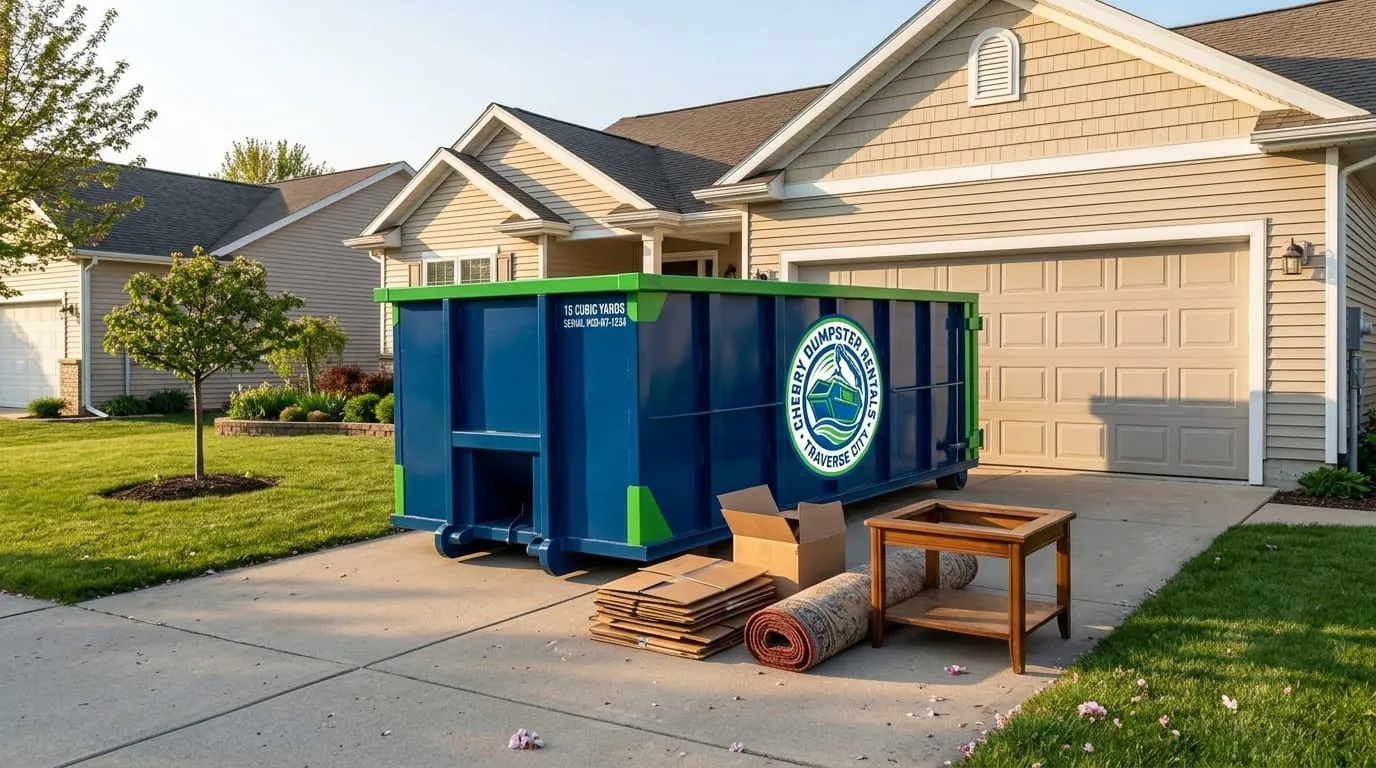
Choosing the right container up front saves you from overflowing bins or paying for space you do not use. Most whole-home estate cleanouts land in the 20-yard range, which comfortably handles the furniture, mattresses, carpet, and general debris of an average house while still fitting in a driveway. Larger properties, or a home plus a packed pole barn, often need a 30-yard or multiple hauls.
| Situation | Recommended size | Roughly holds |
|---|---|---|
| One or two rooms, tidy home | 10-yard | ~3 pickup truck loads |
| Whole-home cleanout, average house | 20-yard | ~6 pickup truck loads |
| Large home, cottage plus pole barn | 30-yard | ~9 pickup truck loads |
| Multi-generational estate, decades of storage | 40-yard or multiple hauls | ~12 pickup truck loads |
The 20-yard dumpster is our most popular estate choice because it balances capacity with a driveway-friendly footprint. If you are unsure, it is usually smarter to book one size up or plan a second haul than to run out of room mid-project. A quick phone call, and an honest description of the house and outbuildings, lets us recommend the right size the first time.
Donation, Consignment, and Resale in the Traverse City Area
Plenty of what fills an estate still has real value or usefulness, and northern Michigan has good options for keeping items out of the landfill. Local Goodwill and thrift stores accept clothing, housewares, and small furniture, and several will arrange pickup for larger donations. For higher-value pieces, antiques, quality furniture, and collectibles, area consignment shops and estate-sale companies can turn belongings into funds for the estate. A well-run estate sale can clear a remarkable amount of a home in a single weekend and is worth considering before you rent your dumpster, since it changes how much you will ultimately need to haul. Get valuable-looking items appraised before selling; up-north homes hide sporting antiques, artwork, and heirlooms that are worth more than they appear. Whatever does not sell or donate can then be sorted into the dispose pile with a clear conscience.
Coordinating When Heirs Live Out of Town
Very often the person managing a Traverse City estate is doing it from Detroit, Chicago, or across the country, coordinating siblings who cannot all be present. A few habits make remote cleanouts far smoother. Photograph every claimed and valuable item and share a running album so distant heirs can weigh in without slowing the work. Set decision deadlines, if no one claims an item by a given date, it moves to donate or sell. Use video calls to walk relatives through rooms in real time. And lean on local hands for the physical work so a single out-of-town heir is not doing it alone on a short visit. Scheduling a dumpster to arrive at the start of an in-person visit and be hauled at the end lets a traveling family accomplish weeks of work in a few focused days.
When to Hire Help
There is no prize for doing everything yourself. Consider bringing in help when the property is large, when heavy or hazardous items are involved, when the timeline is tight, or simply when the emotional weight makes hands-on sorting too much. A junk-removal crew can clear the dispose pile quickly, and combining that labor with a rolloff dumpster is often the fastest, most affordable path for a full estate. Explore our junk removal service when you want the heavy lifting done for you, and let the family focus on the decisions that only they can make. For a project managed start to finish, our estate cleanout service is built specifically for exactly this situation.
Pacing the Emotional Work
Finally, be gentle with yourself and with each other. Disagreements over belongings are rarely about the belongings; they are about grief looking for somewhere to land. Take breaks when tempers rise, keep the shared photo log so no one feels shortchanged, and remember that finishing the house does not mean finishing the mourning. The goal is not to erase a life but to carefully sort it, keeping what matters, sharing what should be shared, and releasing the rest so the property can move on to its next chapter.
Ready When You Are
When you are ready to tackle the hauling, Cherry Dumpster Rentals is here to make that part simple. We serve families throughout Traverse City and Grand Traverse County with right-sized dumpsters, flexible scheduling for out-of-town heirs, and honest advice about what you actually need. Call us at (231) 642-9756 or request a quote, and we will help you take the next step at a pace that works for your family.
Founder, Cherry Dumpster Rentals — sharing straight advice from more than 15 years of local hauling experience.
Frequently Asked Questions
What should I do before anything leaves the house during an estate cleanout?
Secure valuables and documents first. Walk the entire home and gather the will or trust, deeds, titles, insurance policies, financial statements, cash, jewelry, collectibles, keys, and irreplaceable items like photographs. Older relatives often hide cash in books, drawers, and freezers, so check thoroughly before donating or disposing of anything. Lock these items away or give them to the personal representative before general sorting begins.
What size dumpster do I need for an estate cleanout in Traverse City?
Most whole-home estate cleanouts fit a 20-yard dumpster, which holds about six pickup truck loads and sits easily in a driveway. Smaller jobs of one or two rooms may only need a 10-yard, while large homes, especially a cottage plus a packed pole barn, often call for a 30-yard or multiple hauls. When unsure, book one size up or plan a second haul rather than risk running out of room.
How does Michigan probate affect an estate cleanout?
In Michigan, the personal representative (executor) has legal authority over the estate's property, so significant items should not be sold or discarded without their sign-off. Probate in Grand Traverse County can run for months, so keep a simple written or photo log of what leaves the home and where it goes. This documentation protects the family if heirs later disagree about a missing item and keeps distribution consistent with the will.
What can't go in the dumpster during a cottage or pole barn cleanout?
Standard dumpsters cannot take hazardous materials common in up-north properties: old paint and solvents, gasoline and propane tanks, pesticides, used motor oil, and refrigerant-containing appliances. Electronics and some items may also need separate handling. Set these aside for Grand Traverse County's household hazardous waste collection. If you are unsure about a material, ask us before it goes in the bin so the load stays safe and compliant.
How can out-of-town heirs manage an estate cleanout remotely?
Photograph every claimed and valuable item and share a running album so distant relatives can weigh in without slowing the work. Set decision deadlines so unclaimed items move to donate or sell, use video calls to walk through rooms in real time, and hire local help for the physical labor. Scheduling a dumpster to arrive at the start of an in-person visit and be hauled at the end lets a traveling family accomplish weeks of work in just a few focused days.